

Showing posts with label Japan. Show all posts
Showing posts with label Japan. Show all posts
Tuesday, January 24, 2012
Snowkyo
It was snowing last night in Tokyo town, a first for many of us.
 Here is a view from my balcony with the Toden Arakawa tram going by
Thursday, December 29, 2011
A special delivery . M&D day 1
Today was a long awaited and nourishing day. It began by waking up at the crack of noon post a grueling 72 hours at the ASUS helm, clicking away for my university project. My brains cogs spun into gear and I realised I was a little late to meet with the owner of the Sakuramira Cafe down the road. I made myself presentable and dashed out the door. I entered to the delight of T-san and I immediately introduced myself to everybody, ordered a long double espresso and sat down. I met K her husband A and their son M. A could speak good English and we found common ground by sharing our hiking adventures in Nepal. A delivery man entered, whom they all seemed to know well and joined the conversation. After an hour or so, being fed delicious apple pastry, onigiri, receiving gifts and having constant laughs with these generous locals, I really felt quite overwhelmed by it all. To thank my mother for her painting, M made a box set of origami,so I quckly ran home to fetch an Australia beanie to return the gratitude. After another hour or so I left also realising my plans to properly prepare for my parents evening arrival under stress. The next few hours was hectically spent on polishing the travel itinerary and my room. I almost made a huge blunder with the airport express train however my desperate dash across Ueno station saved me. However it was all in vain as my parents flight came in late and they were seated at the back of the plane. As I was waiting in the arrival hall I glared at the televised CNN, realising I hadn't watched English telly since I left Australia. I am not sure whether that's a good or bad thing. Eventually, Big Cam and Mamma Jugs appeared and we warmly embraced. It was mighty fine to see them. We organised ourselves and boarded the Narita Skyliner to Ueno then changed to the Yamanote line to Shimbashi, and after a few bothersome flights of stairs with luggage and getting the analogue train tickets under control, we made it to the hotel. I am so very pleased to be indulging in a spring mattress for the next few nights; my sternum and collar bones can have a rest. We then headed back out and made our way via the JR Yamanote and Toden Arakawa lines to my home in Otsuka to grab my bags and have a bite to eat. However the error in my ways was that the time flew and we had to quickly dash from my room into a cab, straight back to the JR station to not miss the last train at midnight. Luckily we got there and we were on a our way back to Shimbashi with my bags on my back. As I explained to my parents earlier in the evening that the Japanese white collar workers like to hit the drink after work and usually tumble into the last trains. Little did I plan for them to witness it on their first night. There was the obligatory man on all fours spewing his guts out on the Otsuka platform (better out than in I always say) and most of the passengers on the return journey where swaying in a boozy and unconscious manner. We were all famished by the time we got back to Shimbashi and we decided to get the 'gotta try maccas' thing out of the way now to keep things simple.
So after driving to the airport, two flights, four trains, a tram and a taxi my wide Tokyo-eyed parents made it to Japan.


Sunday, December 25, 2011
Saturday, November 19, 2011
Tasogare
Tonight C, J and myself ventured to Komyogi Temple for the annual Tasogare "Twilight" Festival.


" TASOGARE is a ephemeral festival at night with colorful particles of various sounds " http://www.taso.jp
And I would agree. The festival, held in the main hall of the Buddhist temple, was a unique experience in many ways. Firstly to see a live contemporary music performance in a Buddhist Temple is rare even for Japanese locals. Secondly, one of the only three acts was from Brisbane Australia. Unfortunately I found their evident discomfort with the rooms heat, PA sound issues and experimental rockisms difficult to swallow. Lastly, the night ended with all attendees participating in a Sutra Chant to Amida-Buddha; the statue at the centre of the hall.
So we left a little perplexed however satisfied as to the reality of the evening being that we saw Australian and US musicians playing ephemeral electronic in a Buddhist Temple in Tokyo...odd to say the least.
We rounded off the successful evening with a Chinese feast followed by the quintessential ice-cream in Shimbashi, where a steam locomotive was decorated in Christmas lights.


Tuesday, November 15, 2011
Chrysanthemum: Japan's Flower
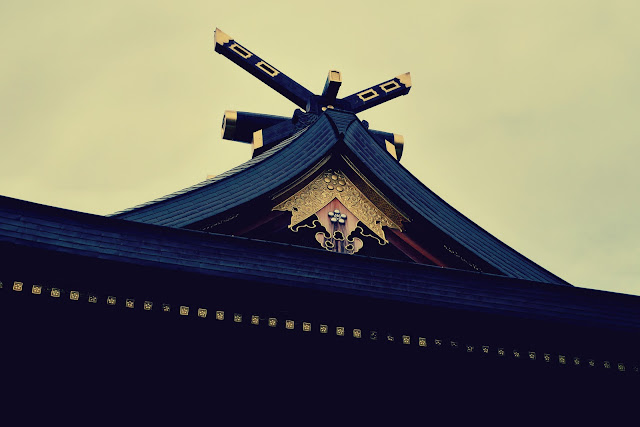
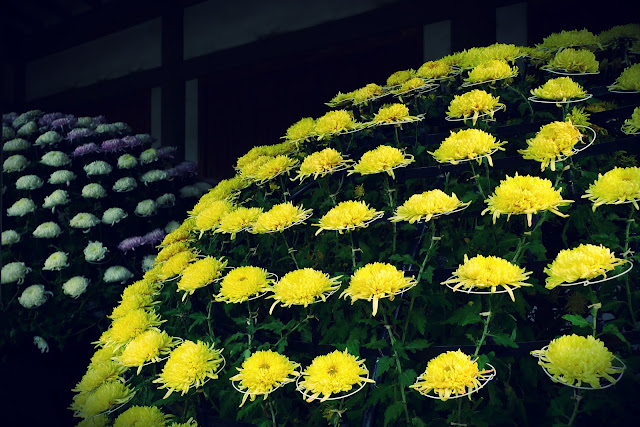
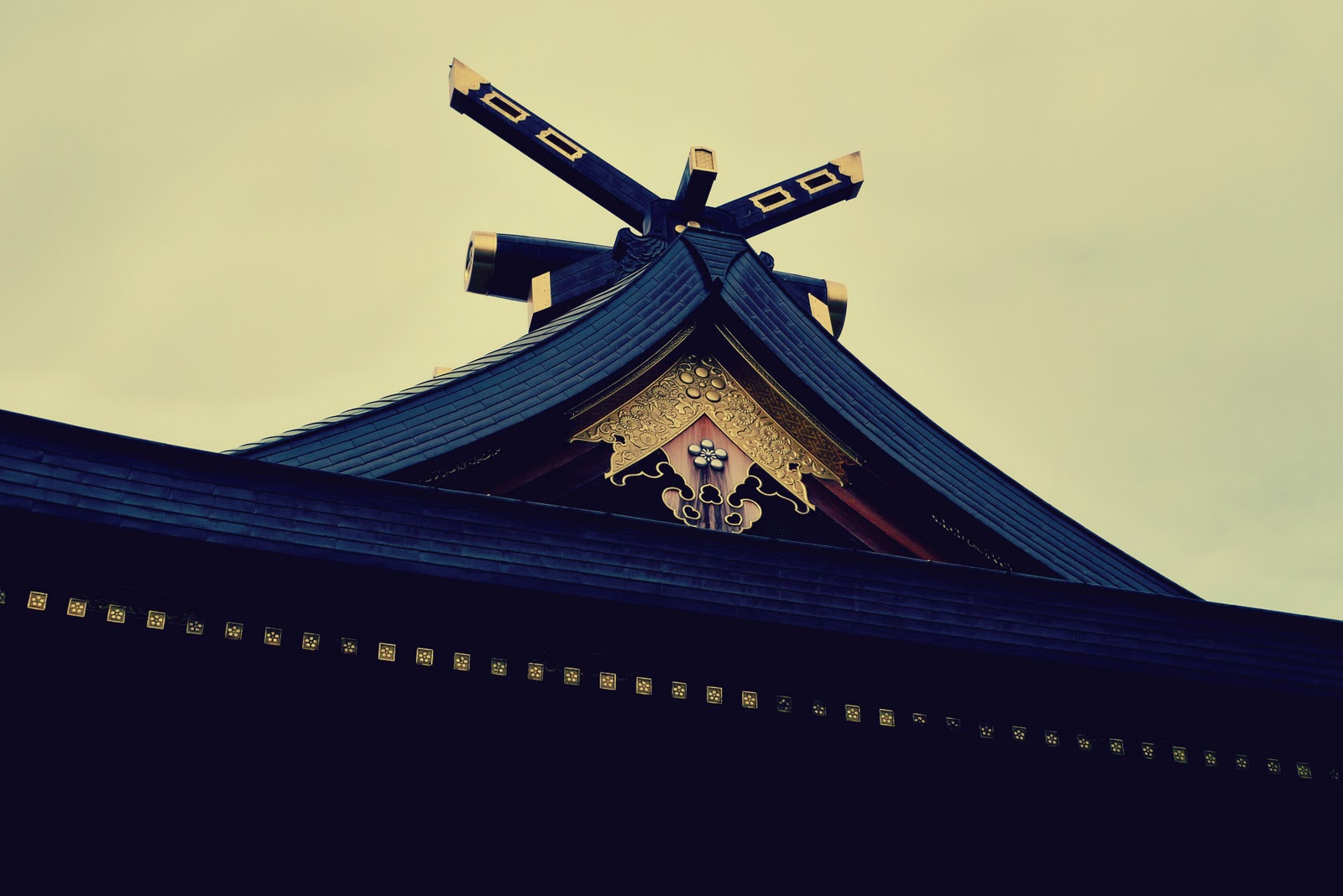
Today's regular Japanese class was substituted for a visit to Yushima Shrine to see the colorful Chrysanthemum displays. Our Sensai guided us there early enough to witness the morning ritual service and many workers dropped by to pray and leave for their regular Monday schedules. An arresting display of individual prayer boards all bearing the message of hope in passing the upcoming exams reminded me of my painful high school examinations. The flowers are a sure summer has passed and winter is on the horizon. A close friend asked me the other day what would be a good time to visit Japan, and of-course April first came to mind, however from my very brief time here so far I understand that Japan relishes in celebrating the beauty that each season has to offer. Autumn is definitely the season of rich color and vibrant color.
The chrysanthemum is the official flower of Japan. It has been cultivated there since the 8th century when it was introduced from China. The imperial family crest bears the symbol of the 16-petaled chrysanthemum, which has long been a symbol of longevity, dignity, and nobility.



The chrysanthemum is the official flower of Japan. It has been cultivated there since the 8th century when it was introduced from China. The imperial family crest bears the symbol of the 16-petaled chrysanthemum, which has long been a symbol of longevity, dignity, and nobility.




Monday, November 14, 2011
Sugamo Jizodori - Harajuku for old ladies
On my ride home this afternoon, I was met wish an exceptionally busy Sugamo Jizodori. A street I ride down every day, it is an extension along the old "Nakasendo" highway, which was one of the five major highways in the Edo period.
Today was definitely a celebration of some sort as stalls selling things from trash and treasure, fish, sweets, antiques and mainly clothing for the elderly. So the presence of young bearded Gaijin wheeling his obtrusive bicycle down the street perplexed many. I also came across these two great buskers at the end of street; one on a traditional Shamisen and the other on tambourine. A fine combination.
The shamisen is a 3 stringed resonating instrument with no frets that is played with a large plectrum. It is officially on the growing wish list.
Sugamo Jizodori shamisen busker


Today was definitely a celebration of some sort as stalls selling things from trash and treasure, fish, sweets, antiques and mainly clothing for the elderly. So the presence of young bearded Gaijin wheeling his obtrusive bicycle down the street perplexed many. I also came across these two great buskers at the end of street; one on a traditional Shamisen and the other on tambourine. A fine combination.
The shamisen is a 3 stringed resonating instrument with no frets that is played with a large plectrum. It is officially on the growing wish list.
Sugamo Jizodori shamisen busker


Sunday, November 13, 2011
Autumn Sunday
After discussions of a Sunday autumn excursion over beers in Omotesando, I trudged home with my close friend C from the Toshima-ku dorm. I had a quick read over some web info on various Tokyo excursions and found the Nishisizawa Ravine hike as the most exciting despite the scarce info provided online. So I hit the futon (really hard) at 2.30am knowing I would need to get moving fairly early for the three hour journey out to Nishisizawa. The following morning all is well and I am up and about, finding myself on the 8.30am Limited Express to Enzan station. I reach Enzan feeling fresh and excited due to the glorious weather; therefore am eager to get the bus out to the starting point of the 4 hour hike. It's 10am and the next bus is at...1pm (two buses are at 8.10 and 9.05am). A few choice four letter words in my native English are blurted out and much to my surprise a local taxi driver close by understands me clearly and joyfully chuckles at my obvious dilemma. So my options are to go home (admitting defeat) or take a $70 taxi to the starting point (keep the autumn excursion dream alive).
Bugger it! let's roll Mr Chuckles.
The taxi ride is glorious. After a month of hectic Tokyo life cruising at top speed next through the mountainside was liberating to say the least. Mr Chuckles is super and stops the meter at least 10mintues before we actually stop, and takes me right to starting point. The hike takes 3.5 hours
(will take longer depending on fitness and amount of photography stops). It was a perfect hike for the afternoon; superb scenery and with easy going path but with interesting sections of clambering up rocks and crossing bridges. I would highly recommend this hike to anyone from Tokyo wanting to escape for a day.


An unexpected highlight was Erinji Shrine (Shingen's family temple). I managed to catch the 3pm bus back to Enzan but saw the temple out the window and instinctively smacked the 'I want to get off' button. As the photos hopefully portray, it is a handsome Shinto shrine encompassed by a superb landscape garden designated by Kokushi Muso.


I concluded the already blissful day stumbling across Keuin Cafe. Run by a friendly and kooky local, Keuin Cafe is decorated with a array of hand-made objects, nic nacs, clothing, instruments, pottery, tapestry, artwork and jewellery. The cafe is located on the second level of this obviously architect designed concrete triangular planned shop / house. The owners living space is clear to view as you enter from the main street and is decorated in a similar hoarding/botanist style as the cafe area above. The coffee and complementary cookie were timely and delicious. She also fed me with books and magazines on Gokayama and iitobori wood carving after I expressed my interest in the traditional Japanese House and her personal collection. I consciously stayed much longer than I should have however I managed to make up time by hitching a ride back to the train station with a local tradesman in the now moonlit Enzan.


Bugger it! let's roll Mr Chuckles.
The taxi ride is glorious. After a month of hectic Tokyo life cruising at top speed next through the mountainside was liberating to say the least. Mr Chuckles is super and stops the meter at least 10mintues before we actually stop, and takes me right to starting point. The hike takes 3.5 hours
(will take longer depending on fitness and amount of photography stops). It was a perfect hike for the afternoon; superb scenery and with easy going path but with interesting sections of clambering up rocks and crossing bridges. I would highly recommend this hike to anyone from Tokyo wanting to escape for a day.


An unexpected highlight was Erinji Shrine (Shingen's family temple). I managed to catch the 3pm bus back to Enzan but saw the temple out the window and instinctively smacked the 'I want to get off' button. As the photos hopefully portray, it is a handsome Shinto shrine encompassed by a superb landscape garden designated by Kokushi Muso.


I concluded the already blissful day stumbling across Keuin Cafe. Run by a friendly and kooky local, Keuin Cafe is decorated with a array of hand-made objects, nic nacs, clothing, instruments, pottery, tapestry, artwork and jewellery. The cafe is located on the second level of this obviously architect designed concrete triangular planned shop / house. The owners living space is clear to view as you enter from the main street and is decorated in a similar hoarding/botanist style as the cafe area above. The coffee and complementary cookie were timely and delicious. She also fed me with books and magazines on Gokayama and iitobori wood carving after I expressed my interest in the traditional Japanese House and her personal collection. I consciously stayed much longer than I should have however I managed to make up time by hitching a ride back to the train station with a local tradesman in the now moonlit Enzan.


Friday, November 11, 2011
Tokyo in View
On return to Tokyo from The open air Museum we headed to Mori Tower in Roppongi Hills. Thankfully the Sky Deck was open and the views were simply breathtaking. Viewing lights and built environment as far as the eyes could see at the comprehensive scale of a Lego city was quite the arresting experience. After taking many photos I proceeded to the Metabolist exhibition...more on that another time. I enjoyed the walk through the Mori Tower rooftop machinery; it added to the experience that below your feet was an overwhelming machine of 57 floors for human commercial and living environments.
Later that evening, I met up with the Wednesday Night Dinner crew for our weekly cuisine splurge. This time it was Indian in Shimokitazawa. The complex curry flavours took me right back to India, and sudden longing to return occurred as I voiced of my many eventful Indian anecdotes to the crew.


Later that evening, I met up with the Wednesday Night Dinner crew for our weekly cuisine splurge. This time it was Indian in Shimokitazawa. The complex curry flavours took me right back to India, and sudden longing to return occurred as I voiced of my many eventful Indian anecdotes to the crew.


Edo Tokyo Open Air Architecture Museum
Today 120 University of Tokyo Japanese Language Class students packed three full buses and headed off on a well organised and architecturally focused excursion. This is my second visit to this superb open air museum; my first being back in April 2010 when snow and blossoms graced the small group tour I was a member of. I will post up photos of this experience at a later date. The Edo Open Air architecture museum, as its name suggests, is reassembled original houses and buildings from the Edo period in Tokyo.
The Museum exhibits;
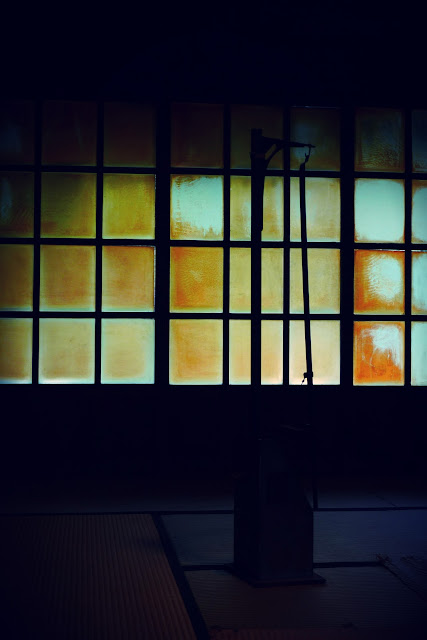
The following are some key photographs I took today, with the intention of capturing the wonderful play of light and darkness within the thatched farmhouses. Upon entering the homes through the earthen floor, the smell and texture of rich smoke rising from the hearth instantly engages the senses. Your eyes adjust to the darkness and your body temperature begins to increase depending on proximity to the fire. Your eyes trace through the choreography of rooms divided by Shoji panels, and then they begin to look upwards at the black structure of the enormous gabled roof. My up-most attention given to these homes. My senses were completely engaged.
I believe their are values key inherent in the design and behavior of the Japanese House. Values that can be used by the contemporary architect to start give greater responsibility to the home once again. A research project of mine for the next year is precisely on finding and articulating these values and studying the Traditional Japanese Home is a major part of this. Therefore, today's experience further enhanced my already intense passion and curiosity about The Japanese House, Edo Japanese Culture and the astounding transformation Japan experienced through Dutch influence and particularly after US Navy Captain Commodore Perry's visit in 1852 before the beginning of the Meiji Era (1868).


The Museum exhibits;
- Sixteenth century thatched roof farmhouses of the working class rice-farmer, wealthy extended family, and important political figures.
- Early twentieth century houses infused with traditional Japanese style and Western modern elements. House of Kunio Mayekawa, 1942
- Recreation of a 'typical' Tokyo street in Edo times featuring a public bathhouse, tailor's workshop, soy sauce workshop, bar, stationary shop, Oil paper umbrella Wholesaler and other great examples.
The following are some key photographs I took today, with the intention of capturing the wonderful play of light and darkness within the thatched farmhouses. Upon entering the homes through the earthen floor, the smell and texture of rich smoke rising from the hearth instantly engages the senses. Your eyes adjust to the darkness and your body temperature begins to increase depending on proximity to the fire. Your eyes trace through the choreography of rooms divided by Shoji panels, and then they begin to look upwards at the black structure of the enormous gabled roof. My up-most attention given to these homes. My senses were completely engaged.
I believe their are values key inherent in the design and behavior of the Japanese House. Values that can be used by the contemporary architect to start give greater responsibility to the home once again. A research project of mine for the next year is precisely on finding and articulating these values and studying the Traditional Japanese Home is a major part of this. Therefore, today's experience further enhanced my already intense passion and curiosity about The Japanese House, Edo Japanese Culture and the astounding transformation Japan experienced through Dutch influence and particularly after US Navy Captain Commodore Perry's visit in 1852 before the beginning of the Meiji Era (1868).


Subscribe to:
Posts (Atom)