This weekend’s events epitomised what I longed for most from my time here in Japan: An invigorated life, if only temporary, through which I find a sense place and a purpose.
Bojan stayed the night at my place because our last train home terminated at Ikebukuro and he was far from home. We casually strolled into the night talking about a whole host of things, stopping by at the many combini on route to home for snacks and towel (mine disappeared from the clothesline). We made it back and I overwhelmed Bojan with my hospitality by just simply setting up a comfy place for him to have well-earned rest. It was a good old primary school sleep over set up. I guess mum taught me well.
Something that I didn’t expect out of my experience here in Japan was to acquire such strong mateships (an Australian coloqial term meaning the embodiment of equality, loyalty and friendship). Bojan is a crazy bastard but a genius in his own way; these go hand in hand. We are loyal and open to each other which has often lead to heated disagreements but most importantly, there is always an unwavering understanding. What my father told me once was that a solid relationship is based on correlating core values. He is right and Bojan and I share many.
So after a Friday evening of beers and pseudo-intellectual banter about Japan and other things with the Danish crew, we rose to continue with a planned frenzy of a weekend. Bojan left to go to a meeting in which he was already half an hour late but “never mind” as he always unwittingly says. I needed to get to the Kengo Kumas Office to hopefully finish off an occasionally stagnate two and a half months of work in the practice. I have become good friends with my colleague Abe san and understood that me completing the work would help her concentrate on her new project. Also, the job wasn’t finished despite it carrying on much further than it should have, so I felt completing it was a the dignified thing to do. In the end, we were both happy to see the project finally finish up. We exhibited the final model for others in the office to gawk at and we received some inspiring comments. As most projects are based at the university, to be placed in the office was a rare opportunity to be exposed to one of the world’s best international architectural practices. I knew it would involve a little selling of my soul, but in my early years I still need to pay my dues and learn as much as I can. More importantly, the experiences lead me to deconstruct my purpose for being there. We all encompass the opportunity to define ourselves however access and the will to carry this out is dependent on many chaotic factors: place, time, health, mental capacity, heritage etc. This chaos can be positively geared and exploited, more so if one participates rather than spectates. I subscribe to this. At the present, my passion for many things is leading me from one opportunity to the next with great purpose and curiosity. In this process, surrounding myself with the right people and giving back to them is quintessential to building a constantly stimulating environment. Of course I feel lost and deflated at times, but being critical and asking the difficult question pulls me back into line. Case in point: I have hardly left my room this week after the latest weekend, not due to tiredness, but due to interrogating what’s important.
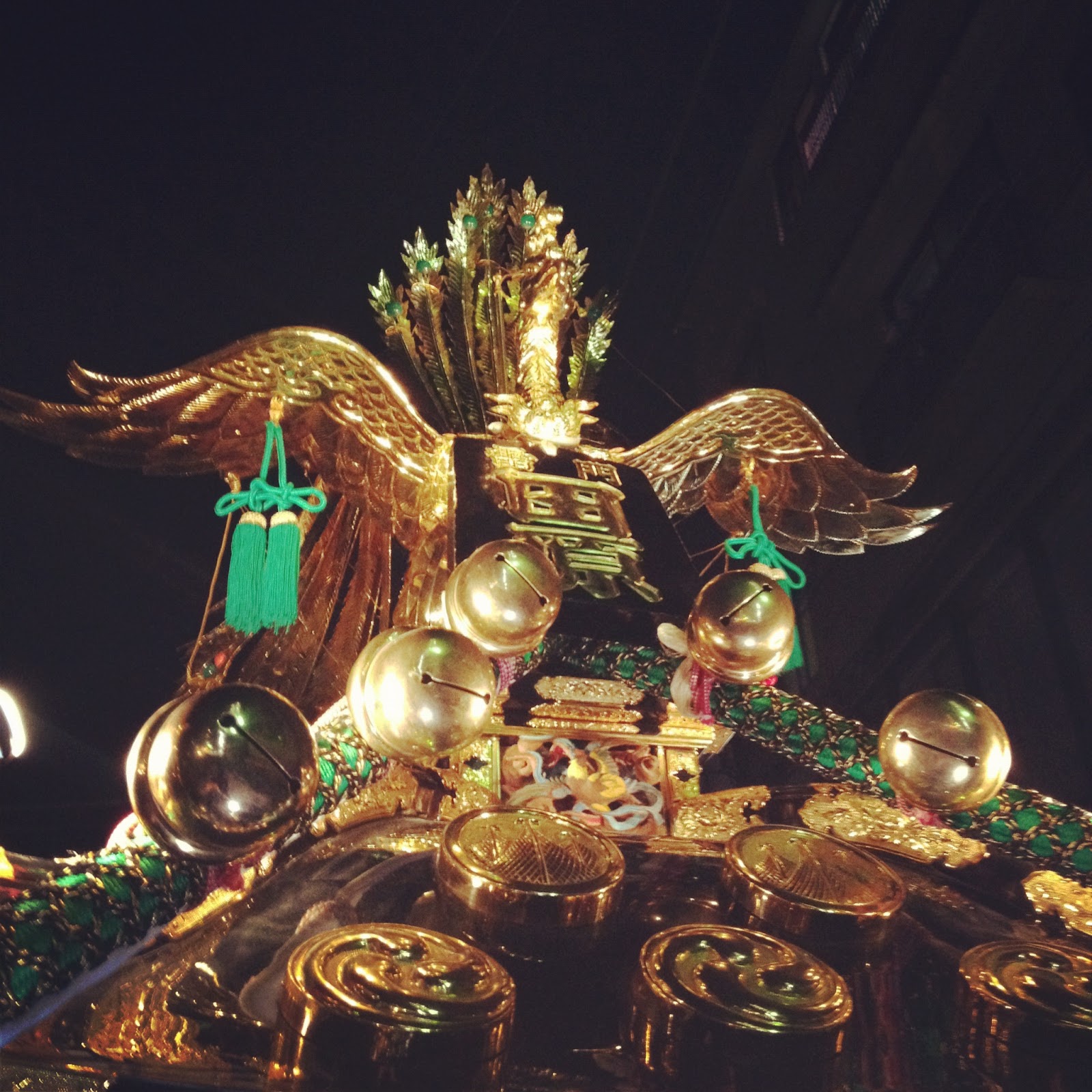
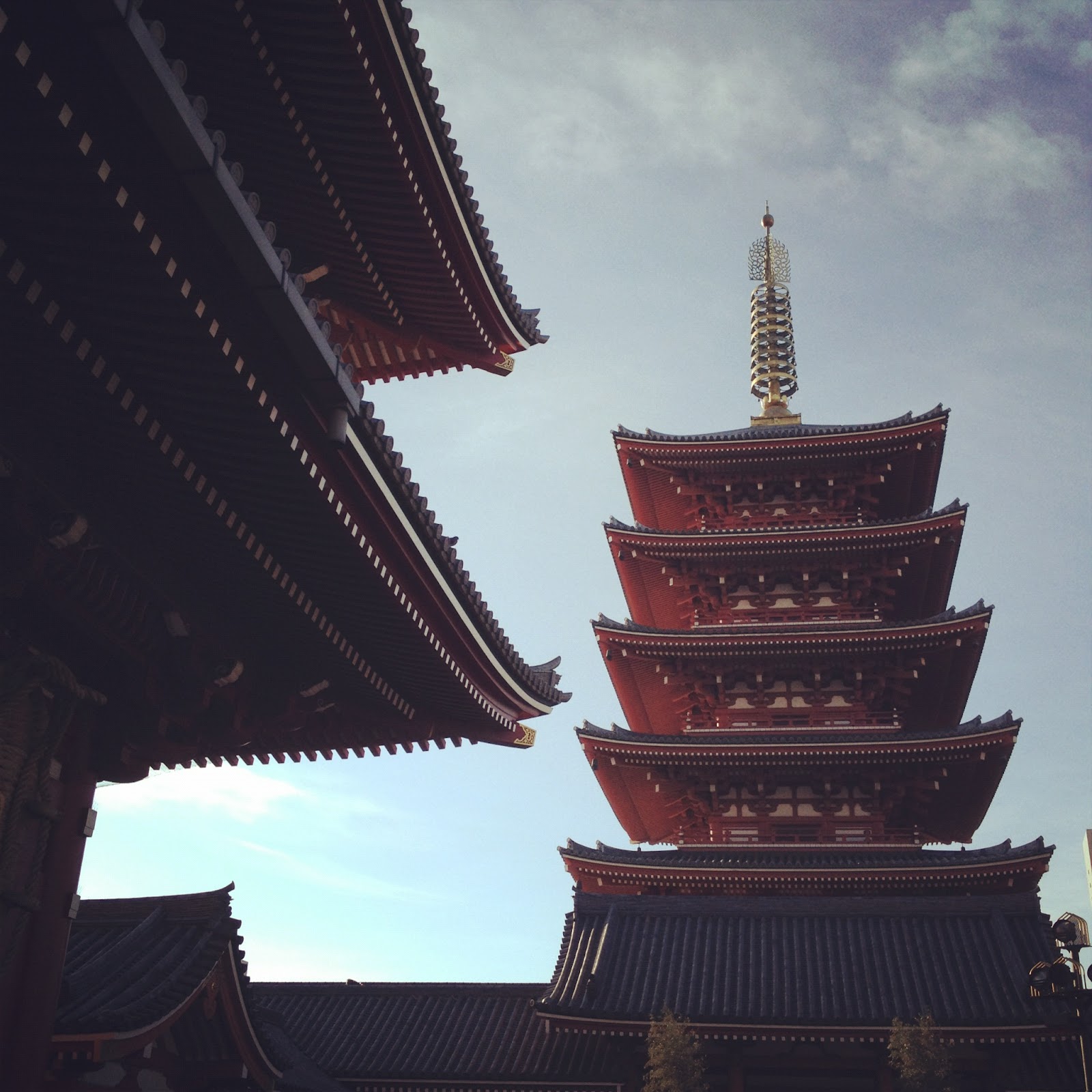
I left the office in a flurry. I dashed onto the Ginza line to head to Askakusa where the Sanja Matsuri Festival was taking place. I rose from the depths of the subway to find Nakmise Street and surrounding areas alive with festive spirit. The Sanja Matsuri (three shrine festival) is held in honor of Hinokuma Hamanari, Hinokuma Takenari and Hajino Nakatomo, the three men who established and founded Senso-ji Temple. The festival is coursed over three days in the third weekend in May. Its prominent parades revolve around three mikoshi (three portable shrines referenced in the festival's name), as well as traditional music and dancing. We were here Saturday in which approximately 100 mikoshi from the 44 Asakusa districts are carried by the district members. Bojan and I trailed behind a mikoshi party taking pictures and just simply enjoying the moment. An Aussie guy married to a local was part of the carrying parade and he handed his jersey to Bojan and he jumped in. Then a kind local guy handed me a jersey and I jumped in as well. So we bobbed up and down, stepped side to side, chanted and helped carry this two ton mikoshi through the Asakusa backstreets. What a moment. What a privilege. At the end we were gifted with a bento and beer for our voluntary participation. Again it was just wonderful to participate, rather than spectate even if my agenda wasn’t totally parallel with the locals in a religious sense.
We called it a night and it was onto the next event. I rushed back to the university to grab pick up a few things and called my other great mate Cezar. We met each other on my first full day in Japan and the rest they say is history. He is one the most profoundly intelligent people I have ever met. It is always a pleasure to bounce ideas, thoughts and opinions at him because the response will be wise and underpinned by his acute philosophical pedigree…or completely hilarious in the driest of manner. It seems he will be leaving Japan within a month or so and I am not looking forward to his departure in any way. We live in the same dorm and therefore have shared countless hours of doing whatever: eating, drinking, talking, burping, laughing, gaming, debating, hypothesizing, reminiscing and so on and so forth. Consequently, a deep void will be left when he leaves but I am sure a lifelong bond will remain. Our paths will cross again.
Cezar was asleep when I called after he had a comparatively uninspiring experience at the festival earlier in the afternoon. We were both due to go to a friend’s house party out west, and I was doubtful of his participation based on his dreary state over the phone and it already being 10pm. But like a true champ he hauled himself out of his afternoon slumber and agreed to meet me at Sasazuka Station. We had agreed to stay only until the last train or at worst to take a taxi at a reasonable hour because I had a hiking trip planned the next morning and Cezar doesn’t cope too well with all-nighters, who does really? We strolled through the quaint and labyrinthine Sasazuka streets, enjoying the challenge of listening out for that ‘party’ sound. We eventually found it and made our way inside a well-appointed three storey modern Tokyo home. Julia, our Austrian friend, lives here with a couple of local guys and so the crowd was an even mix of locals and imports. The kitchen, dining and lounge areas were full and the atmosphere was warm, intimate and very social. These healthy characteristics meant that we would inevitably stick it out the whole night. For five or so hours I mingled, drank, snacked and chatted until I snoozed on the balcony until the sun rose. I was due at Shinjuku, with my hiking gear and ready to go at 6:30am. This was rough. Cezar and I left in the full light of day and made our way back home so I could gather myself and head off. Cezar thought I was going to die and rightly so. Nonetheless, like a true crazy person I dashed off and made it to the bus just in time feeling rather ok. I chatted to my seating buddy Bret an English teacher from California for about an hour and then I invested in a couple hours sleep on the bus until we got to our destination at the base of Mount Amagi.
This day trip was orgainsed by the Tokyo Gaijins group who offer a range of events for both foreigners and locals wanting to work in their English. This was my first time to join an event and I was quite impressed. It was very well organised, attracted a good mix of people and the cost was reasonable. Mt. Amagi is a dormant volcano on the Izu peninsula further south of Hakodate in the Shizuoka Prefecture. . The day was overcast so views of Fuji were minimal, but at least it was cool and dry. The hills here are covered in Japanese maple and beech, with rhododendron and heather combining in a variety of colours that are best seen at the end of May. My agenda for the trip was to meet some new people, try out some new gear and get the legs moving in preparation for my Karakoram Himalayan adventure in July/August. These “blind” activities are definitely something I have been more inclined to participate in as being a foreigner; however I plan to echo this attitude when I return home. It really is a great way to meet people and break your routine. After today’s effort I definitely need to strengthen my conditioning but I am confident I will be ready to hit the high mountains in a couple months’ time. At the end of the day after walking and talking for 6 hours we were all completely spent and most slept on the bus back to Shinjuku. I said my farewells, rode the Yamonote line to Otuska and finally made it back to my bed at 10 and crashed. Quite the 48 hours.
As I said in the beginning, the success and of this abroad experience so far to me has been dependent on finding a sense of place. Life for many revolves around three particular qauntitave environments / geographies of work, home and the re-occurrence in between. What binds these environments is the qualitative sense of friendship and one’s own pursuit. When you begin a new life somewhere, whether it is in another country or the next suburb, you have to seek out and nurture these qauntitave and qualitative factors in order to maintain a sustained sense of place and purpose. I feel I have achieved this to a certain extent and it is going to be hard to let it go.